
Source: CMS
Europe’s pharmaceutical sector is navigating regulatory overhaul, supply chain volatility, and mounting environmental mandates – all simultaneously. For general counsel, that means the job description has fundamentally shifted.
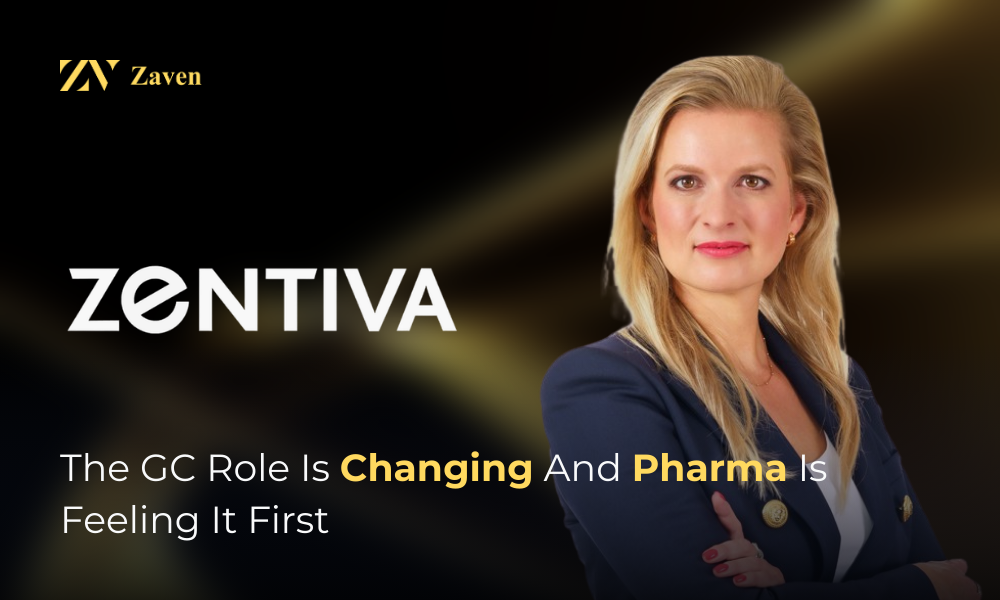
Tereza Ber, General Counsel at Zentiva, one of Europe’s leading generic medicine manufacturers, describes the change plainly: legal is no longer brought in to validate decisions after they’re made. The function now sits at the table when real choices are still open.
“Our job is to structure complex issues so the business can clearly anticipate consequences, understand risk exposure, and decide with confidence,” Ber explains. “It’s like playing multiple games of chess – different countries, different timelines, different rules, which can change mid-game.”
From Risk Management to Value Creation
The traditional GC mandate – manage legal risk, protect the business – remains essential. But Ber’s remit now spans legal, IP, compliance, corporate governance, and M&A support across more than 30 markets and close to 50 legal entities.
The shift isn’t just structural. It’s about timing and influence. Legal input increasingly shapes where Zentiva invests, how it structures growth, and which risks are worth taking.
“Legal work is most rewarding when it visibly improves outcomes,” Ber says. That includes supporting acquisitions, navigating complex IP barriers to bring generics to market faster, and enabling medicines to move from development to launch.
AI as Infrastructure, Not Vision Statement
On artificial intelligence, Ber is pragmatic rather than evangelical.
“AI is not a vision statement. It is infrastructure,” she says. “Used well, it helps manage scale, consistency, and speed. Used poorly, it creates risk.”
Zentiva already deploys AI in regulatory intelligence, pharmacovigilance, contract analytics, and compliance monitoring – high-volume tasks where automation materially improves quality.
But judgment remains non-negotiable. The objective isn’t to replace lawyers. It’s to free them from administrative work so they can focus on analysis, constructive challenge, and relationship-building.
“AI should create the space for lawyers to be closer to the business – simply doing the human work that makes the job meaningful.”
Regulation as Strategic Risk
Compliance in pharma isn’t procedural. It’s existential.
Ber highlights the EU’s Urban Wastewater Treatment Directive as a pressing concern. The extended producer responsibility mechanism, she argues, relies on incomplete science and imposes disproportionate costs on generics manufacturers already operating on thin margins.
“This threatens affordability and access for millions of patients,” she says. Zentiva is challenging the approach through legal action and advocacy.
Meanwhile, broader EU pharmaceutical legislation – covering data exclusivity, medicine shortages, and environmental risk assessments – is shaping the sector’s future. Ber’s position: sustainability must be achieved without jeopardising patient care.
What Keeps a GC Motivated?
Every hour brings a different issue, often in a different country, with different legal, regulatory, and cultural dimensions. That variety, Ber says, is energising.
“At its core, my role involves setting direction when there is no obvious answer. It’s about framing the problem, weighing options, and giving our company the confidence to move.”
The takeaway for legal leaders? The GC role is no longer about backstopping decisions. It’s about shaping them – and that requires judgment, speed, and the willingness to draw lines when it matters.
Read more: CMS